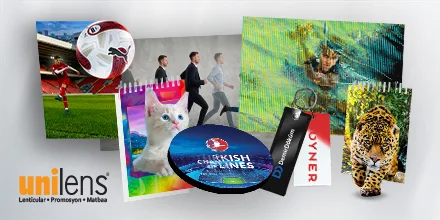
What is Lenticular?
Lenticular is a visual technique created by combining a special plastic sheet, whose surface is made of very fine rows of lenses, with a print prepared specifically for that sheet. As your viewing angle changes, different images appear on the same surface, so a flat print is perceived as moving, changing or gaining depth.
In short: Lenticular printing is a print technique that creates a sense of motion and depth simply by changing the viewing angle — with no glasses, screen or electricity required.
How Does Lenticular Printing Work?
The technique is built on two components: an interlaced image and a lenticular lens sheet. The process can be summed up in three steps:
- The images are prepared: Two or more images are sliced into thin strips and combined in sequence into a single print file.
- They meet the lens sheet: Each lens on the sheet directs only one of the strips beneath it towards a specific angle.
- The effect appears: As the viewer moves or the print is tilted, the eye sees different strips; the image changes, comes to life or gains depth.
Lens density, sheet thickness and viewing distance are all connected. Thin, fine-pitch sheets are preferred for small hand-held pieces, while thicker sheets with wider lenses are used for large-format work viewed from a distance.
Types of Lenticular Effects
| Effect | What does it do? | Best suited for |
|---|---|---|
| Flip | Switches cleanly between two or three different images depending on the viewing angle. | Before–after stories, product–message pairings |
| Animation | Creates a short sense of motion with a sequence of frames. | A product opening, a character moving |
| 3D depth | Layers are perceived at different depths; the product appears to stand out. | Posters, displays, packaging |
| Zoom | An element appears to move closer or further away. | Logo and product emphasis |
| Morph | One image smoothly transforms into another. | Product renewals, transformation stories |
Lenticular Work Examples
The examples below show how widely the lenticular technique can be applied, from large-format visuals to hand-held promotional products. Click the images for details.
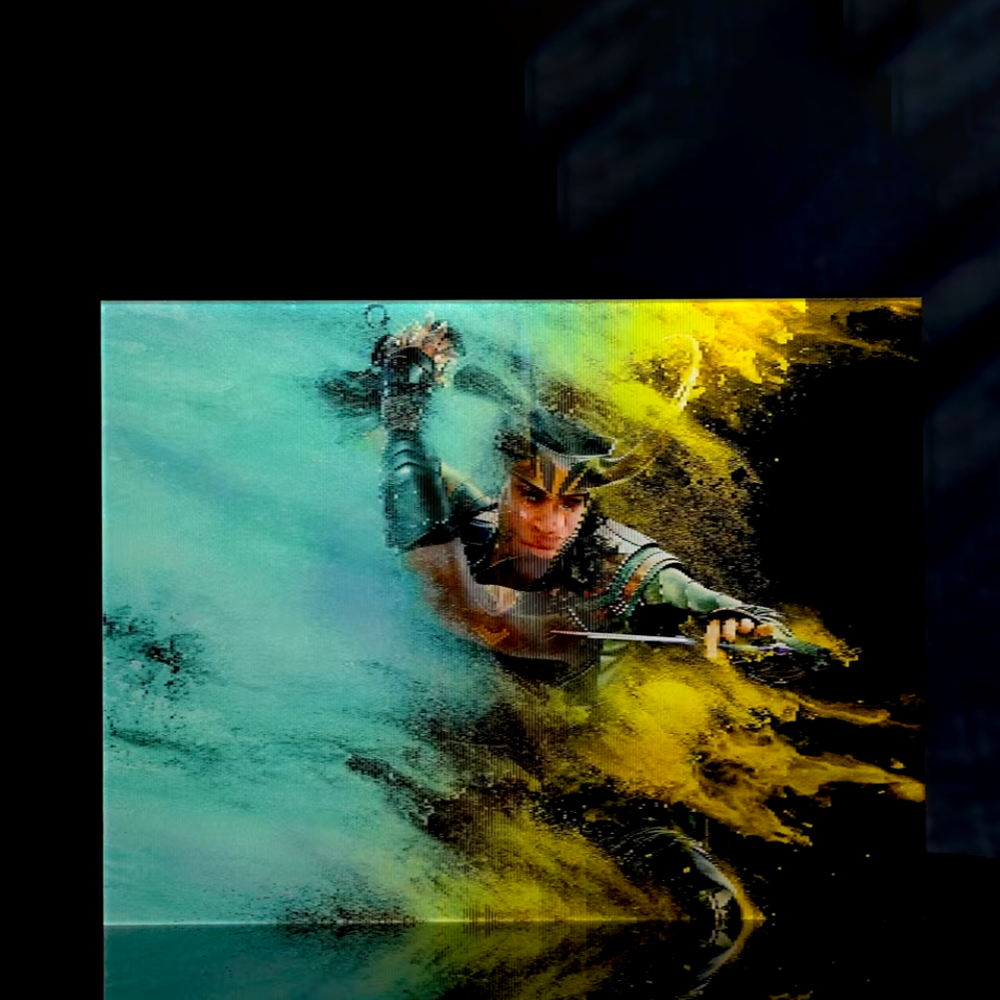 Lenticular Poster Stands out on the wall with 3D depth and motion. |
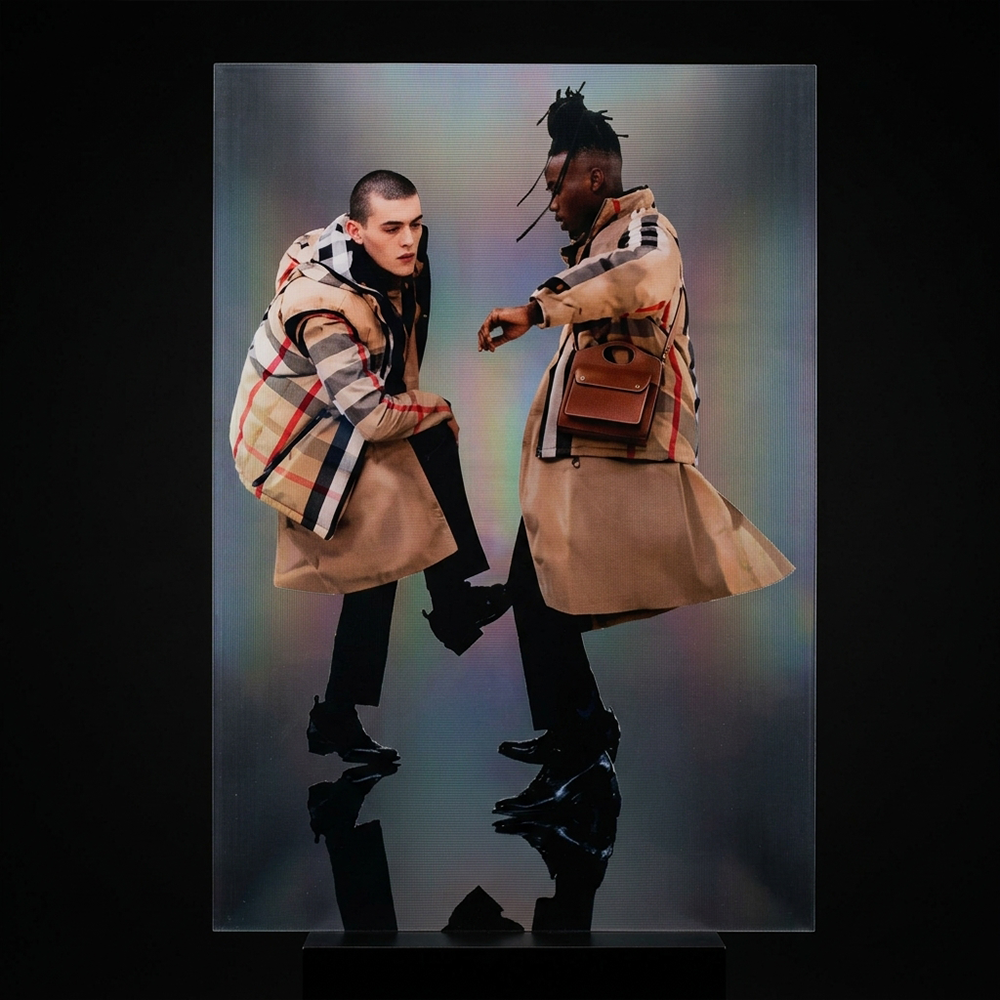 Lenticular Billboard A large-format visual that changes with every step of the passer-by. |
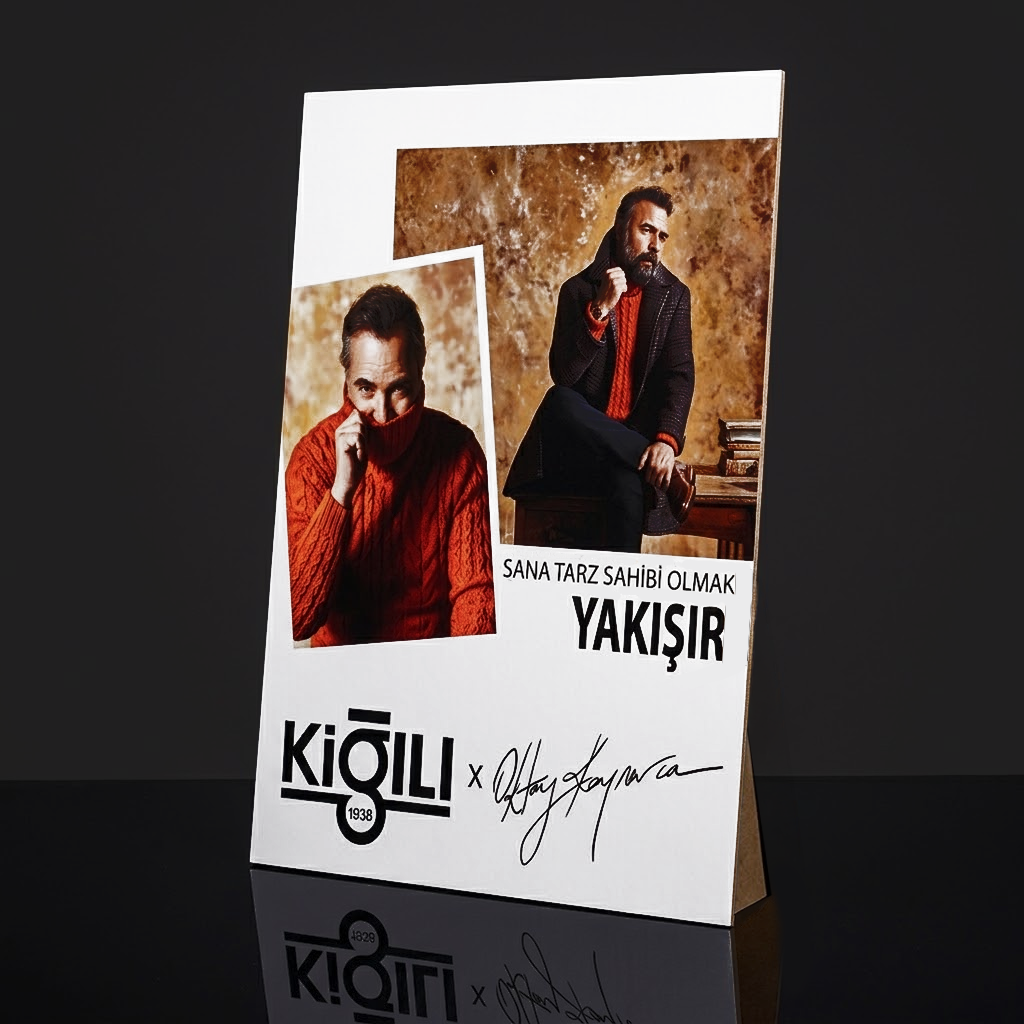 Lenticular Standing Display An eye-catching countertop display for stores and stands. |
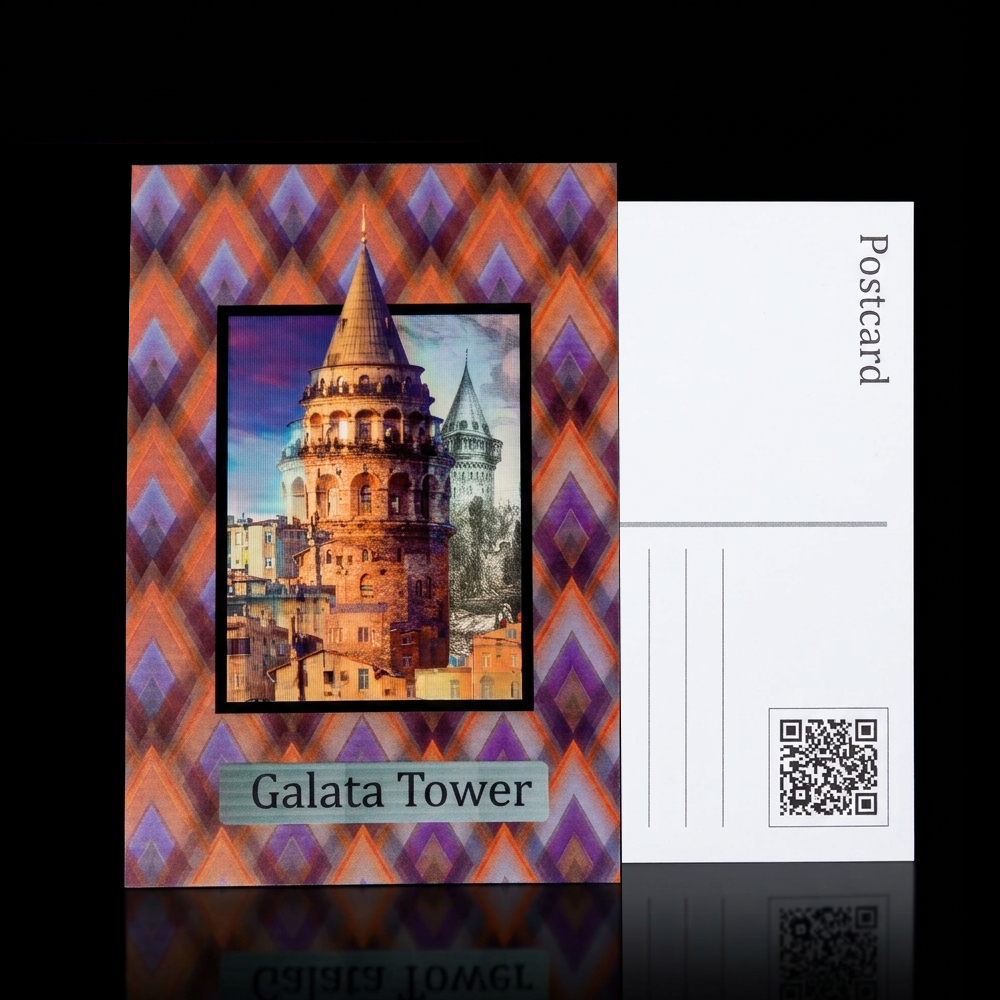 Lenticular Postcard A moving keepsake that is saved and shared. |
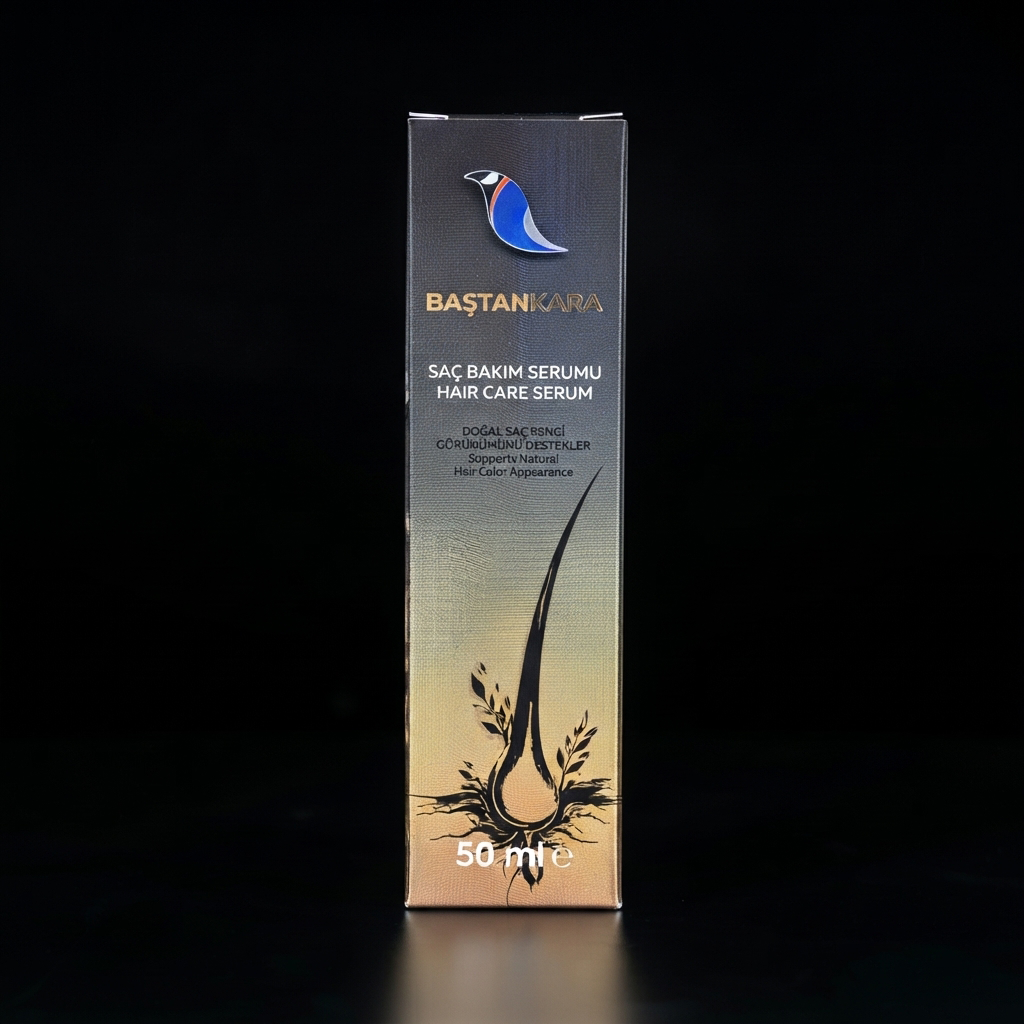 Lenticular Product Box Dynamic packaging that makes the product stand out on the shelf. |
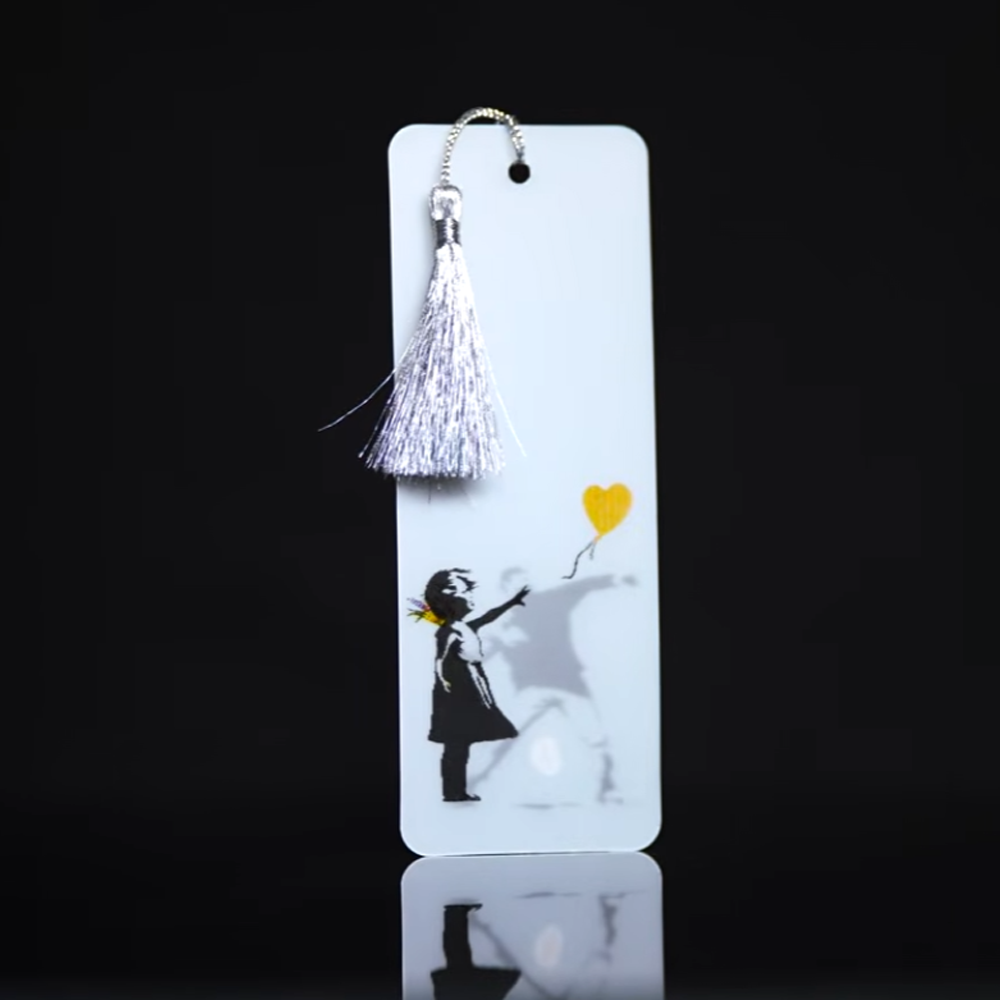 Lenticular Bookmark Reminds readers of your message every time the book is opened. |
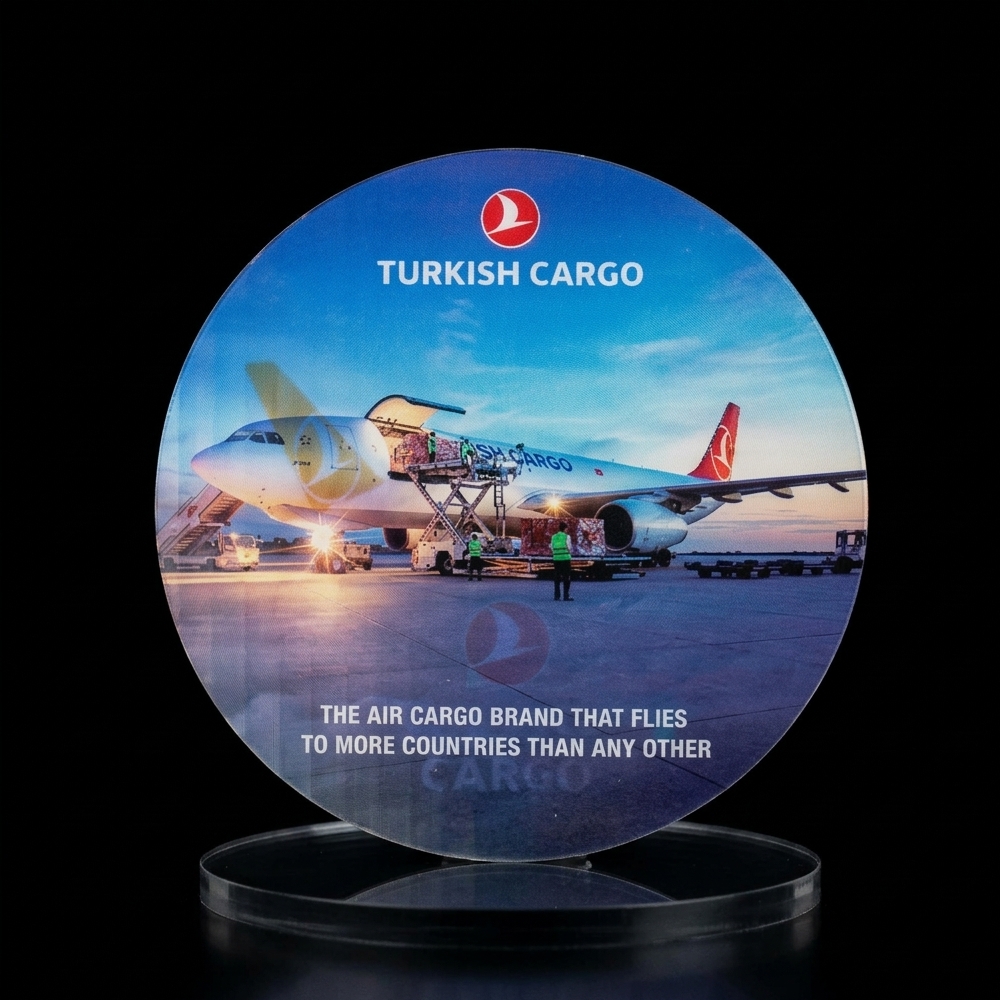 Lenticular Coaster Lasting promotion that is used on the desk every day. |
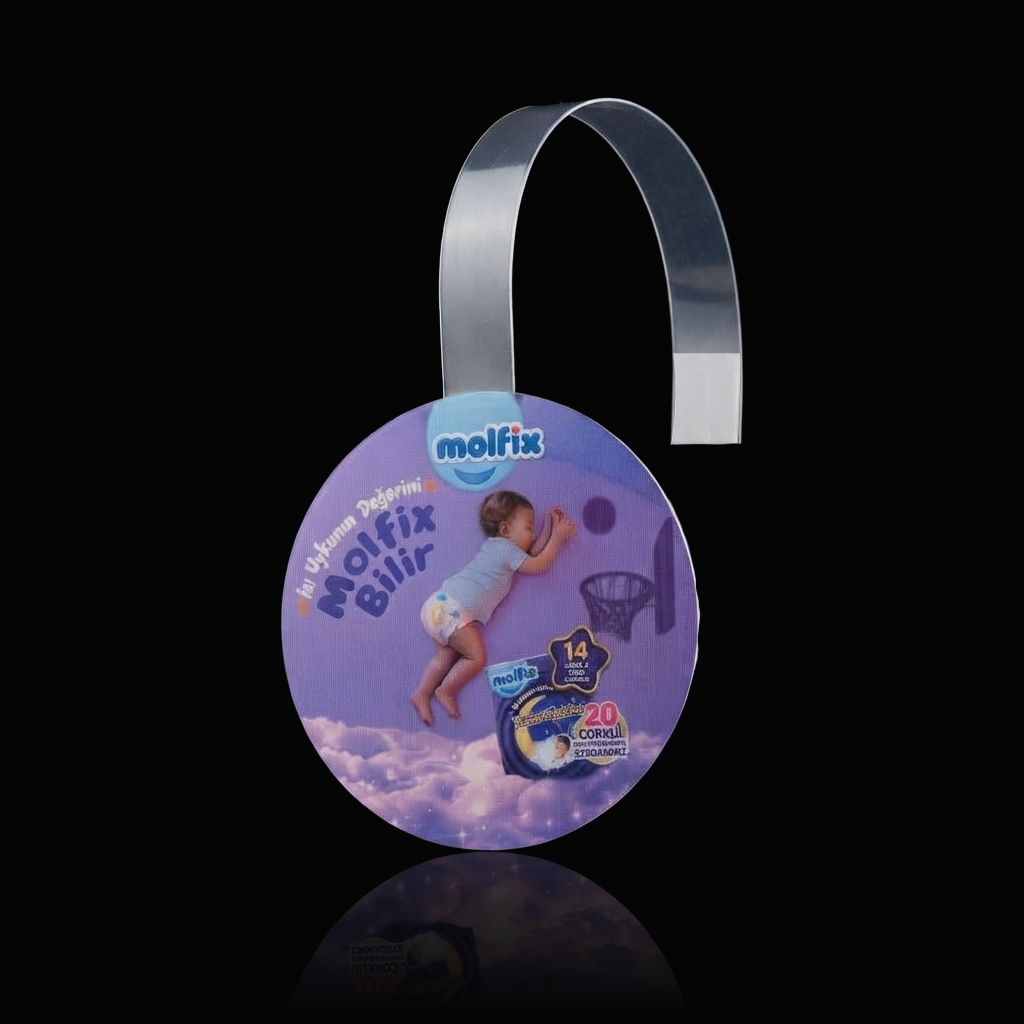 Lenticular Wobbler Draws attention at the shelf edge by wobbling and changing. |
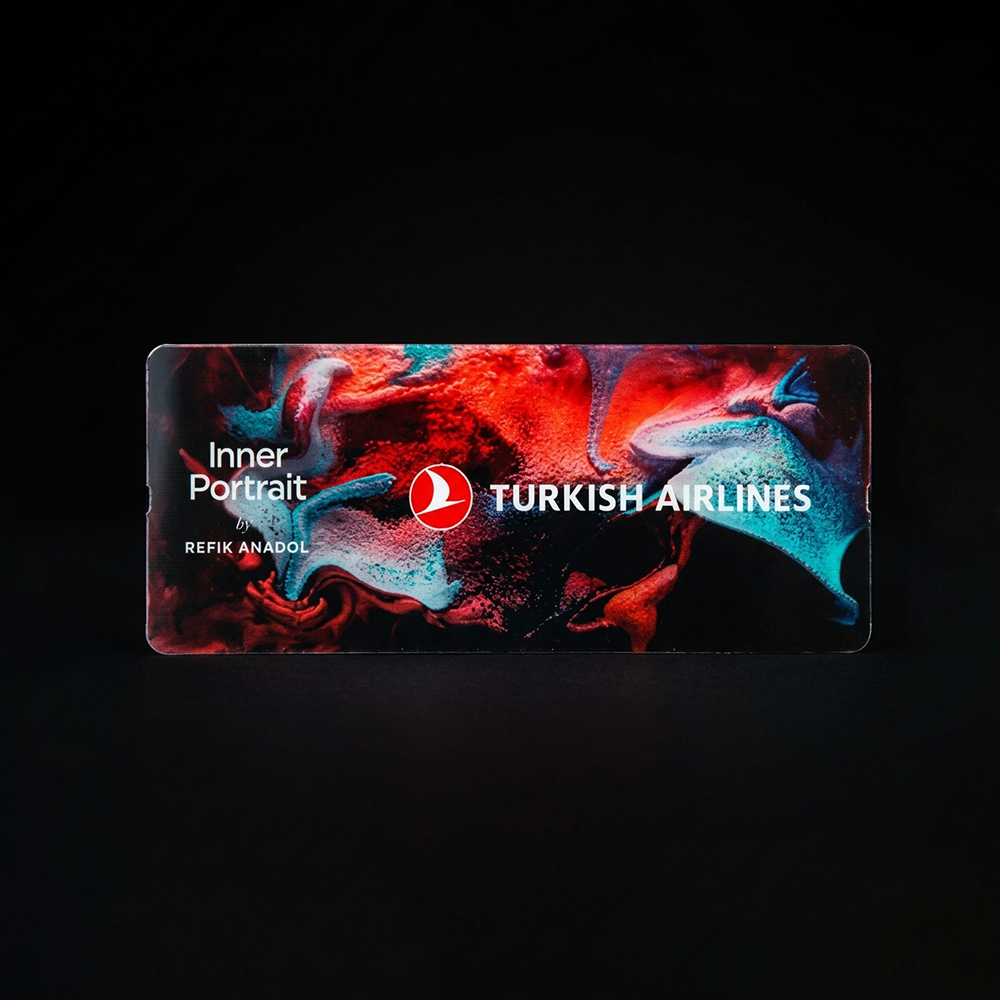 Lenticular Invitation Makes the event memorable from the moment the envelope is opened. |
Explore all lenticular products →
Where Is Lenticular Printing Used?
- Advertising and outdoor: posters, billboards, in-store visuals, window displays
- Point of sale: wobblers, standing displays, shelf and stand applications
- Packaging: product boxes, labels and covers
- Corporate communication: business cards, invitations, brochures, postcards
- Promotional products: magnets, bookmarks, coasters, rulers, mouse pads, keychains
Advantages of Lenticular Printing
- It grabs attention: A moving, changing visual attracts far more looks than an ordinary print.
- It is memorable: Viewers pick the print up and tilt it, interacting with it; the message sticks.
- Multiple messages on one surface: Several images or a short story can be told in the same space.
- No electricity or screen needed: Motion close to a digital screen effect, with the practicality of printed material.
- It is kept: Lenticular promotional products are usually not thrown away and stay in use for a long time.
What to Consider When Preparing a Design
- Choose the effect type according to the purpose of the job; not every image suits every effect.
- For flip effects, images with similar colours and composition give a cleaner transition.
- Thin text and small details can lose sharpness because of the lens structure; keep important text large and simple.
- For 3D work, prepare the artwork in layers (foreground, midground and background separated).
- Decide the viewing distance and print size at the start; the lens sheet is selected accordingly.
Frequently Asked Questions
Is lenticular printing the same as a hologram?
No. A hologram is a different technique based on the diffraction of light. In lenticular printing the effect comes from the lens sheet on top of the print, and the images can be full colour and photographic in quality.
Do you need glasses to see a lenticular print?
No. All lenticular effects, including 3D, are visible to the naked eye.
How many images can be used in one lenticular print?
For flip effects, two or three images usually give the sharpest result. Animation effects can use more frames; as the number of frames increases, the design needs to be prepared accordingly to keep transitions clear.
What sizes can lenticular prints be produced in?
Production is possible in many sizes, from small business-card pieces to large-format posters and panels. The right lens sheet is chosen according to the size and viewing distance.
Let's decide together which lenticular effect is right for your project.
Request a quote | Contact us